

Water-Damaged Gymnasium Flooring in Ohio: Causes, Consequences, and Solutions
Wood gymnasium flooring is a significant investment for schools, universities, recreation centers, and athletic facilities across Ohio. Unfortunately, water damage is one of the most common—and most destructive—issues affecting hardwood gym floors. Understanding the causes, warning signs, and proper remediation process is critical to protecting both athlete safety and the lifespan of your floor.
Common Causes of Water Damage in Wood Gym Floors
Gymnasium floors can become saturated with water for several reasons, including:
- Roof leaks caused by aging or storm-damaged roofing systems
- Burst or leaking pipes from plumbing or fire suppression systems
- Improper maintenance practices, such as excessive wet mopping
- High relative humidity, especially in facilities without proper climate control
Facilities throughout Ohio experience seasonal humidity fluctuations, which can place added stress on wood flooring systems if moisture is not properly managed.
How Water Damage Affects Gymnasium Flooring Performance
When water penetrates a gym floor system, it weakens both the hardwood planks and the subfloor components. Over time, this reduces the floor’s overall strength, durability, and service life.
Water-damaged gym floors often lose:
- Proper traction
- Consistent ball bounce
- Smooth player glide
These performance issues directly affect athletic play and can create safety hazards for athletes and staff.
Structural Changes Caused by Moisture Absorption
Once hardwood planks absorb excessive moisture, especially from the underside, the resulting structural changes are often permanent.
Common moisture-related failures include:
Cupping
Cupping is typically the first visible sign of water damage. It occurs when moisture causes the bottom of the planks to swell, forcing the edges to rise higher than the center, creating a cup-like shape.
Crowning
If moisture exposure continues, or if the floor dries unevenly, crowning may occur. Crowning happens when the center of the plank rises higher than the edges, often due to:
- Continued moisture imbalance
- Improper or premature sanding before the floor is fully dry
Buckling
Buckling is the most severe form of wood floor failure. In this condition, entire sections of the gym floor lift off the subfloor system, creating waves or raised areas. Buckling typically indicates prolonged moisture exposure and requires a full floor replacement.
Mold Risk Beneath Water-Damaged Gym Floors
Another major concern with water-damaged gymnasium flooring is mold growth. Moisture barriers can sometimes trap water between the vapor barrier and the concrete slab, creating ideal conditions for mold to develop beneath the floor system. Left unaddressed, this can lead to indoor air quality issues and additional remediation costs.
Proper Drying and Replacement Process
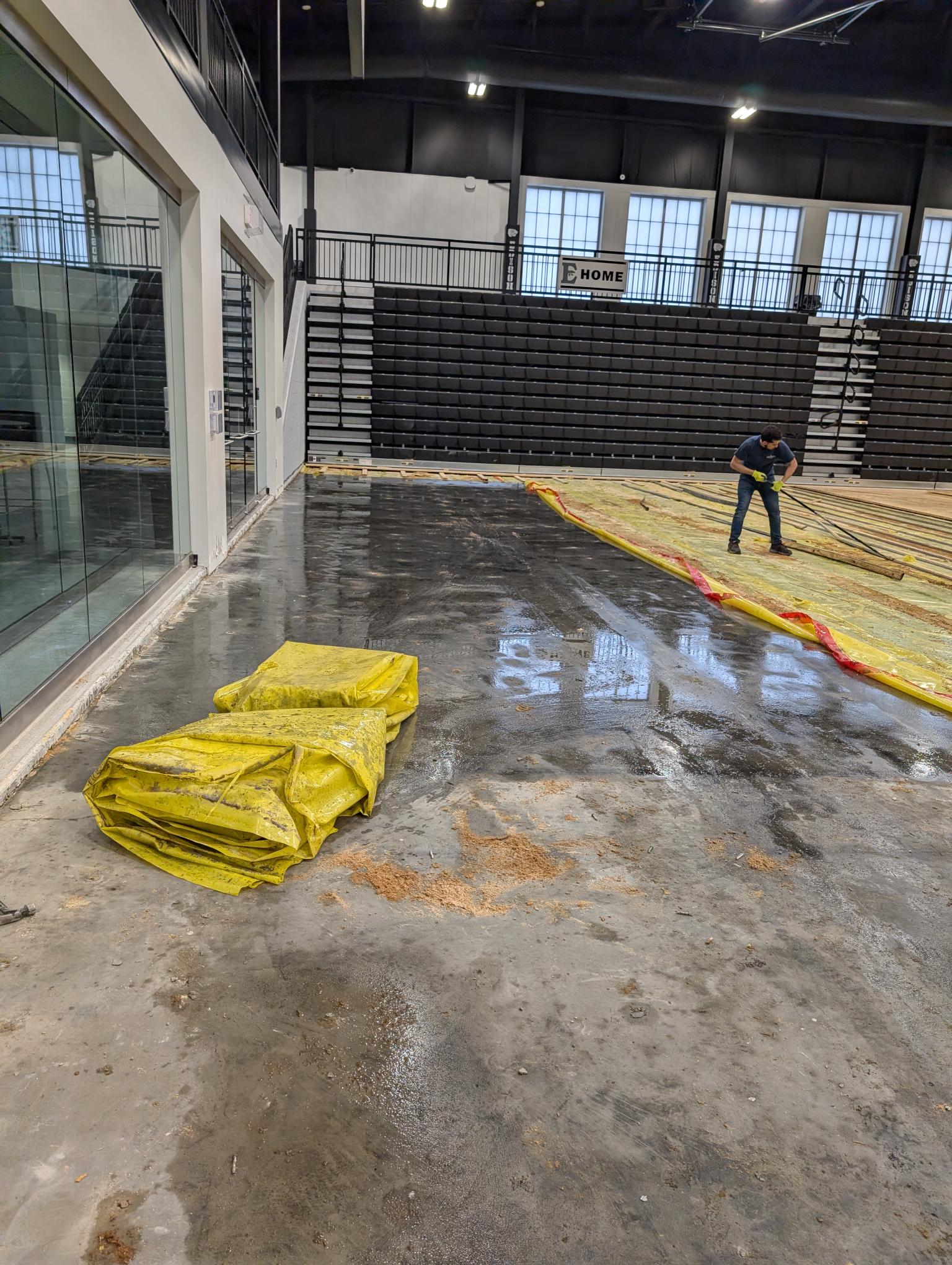
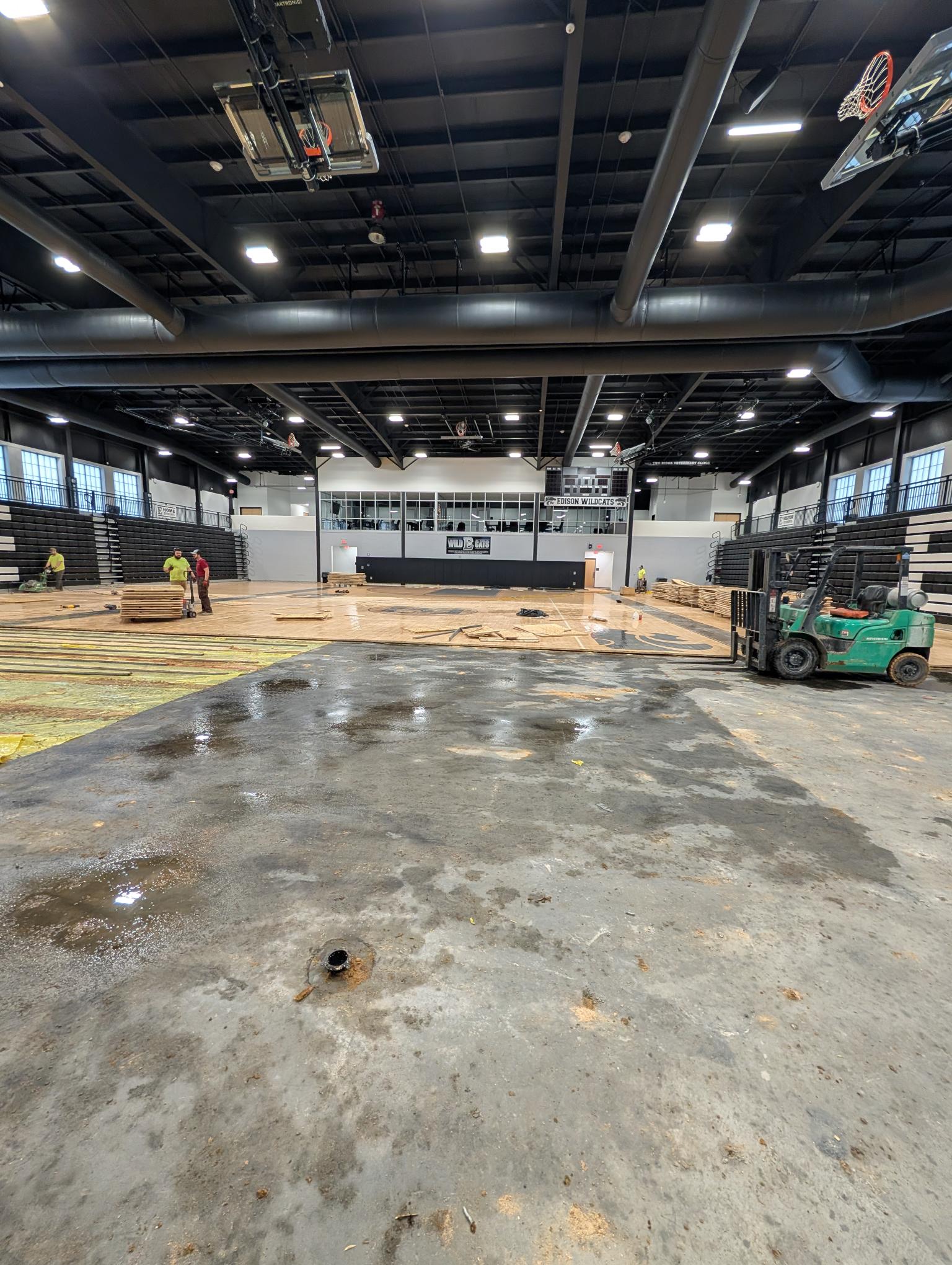
Before installing a new gym floor, all damaged flooring, subflooring, and vapor barriers must be removed. Industrial air movers and drying equipment are then used to thoroughly dry the concrete slab.
Moisture testing is a critical step during this phase to ensure the slab is within acceptable limits and to prevent future flooring failures. Only after moisture conditions are controlled should the gym floor replacement process begin.
Turning Damage Into Opportunity
While water-damaged wood gym flooring can be devastating, it also presents an opportunity to redesign and upgrade your court. From new layouts and logos to updated finishes and performance systems, are placement project allows facilities to modernize their athletic space.
If your facility anywhere in Ohio is dealing with water-damaged gymnasium flooring, The Ohio Floor Company can help. Contact us today to discuss our proven process—from safe removal of damaged flooring to the design and installation of a brand-new hardwood gym floor built to perform for years to come.